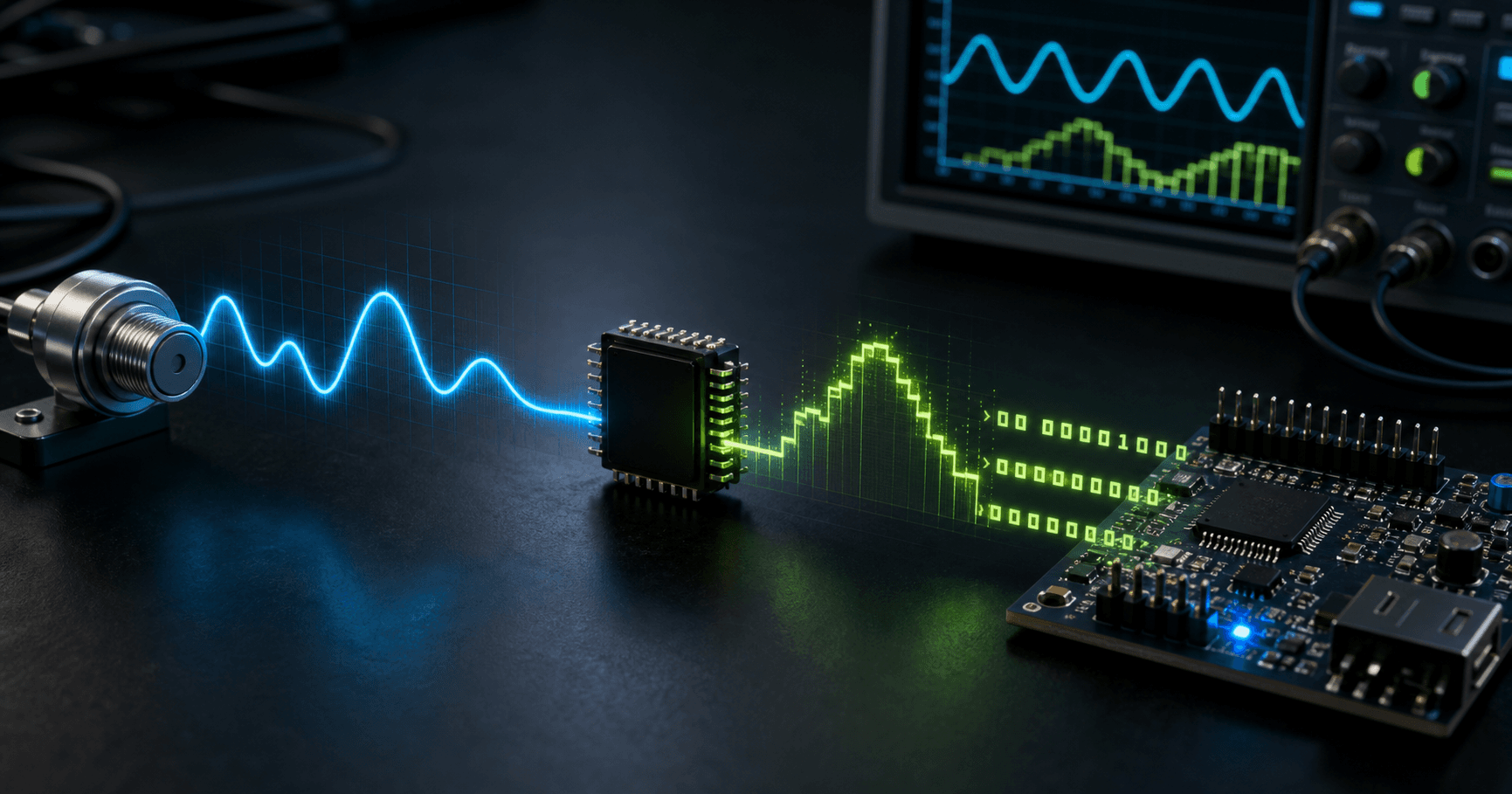
How ADC Works: Direct Definition
- [How ADC Works] [connects] [circuit theory to practical wiring]
- [how ADC works] [improves] [debugging accuracy and component selection]
- [Volt X guides] [link] [related tools, sensors, and embedded systems]
What an ADC Actually Does
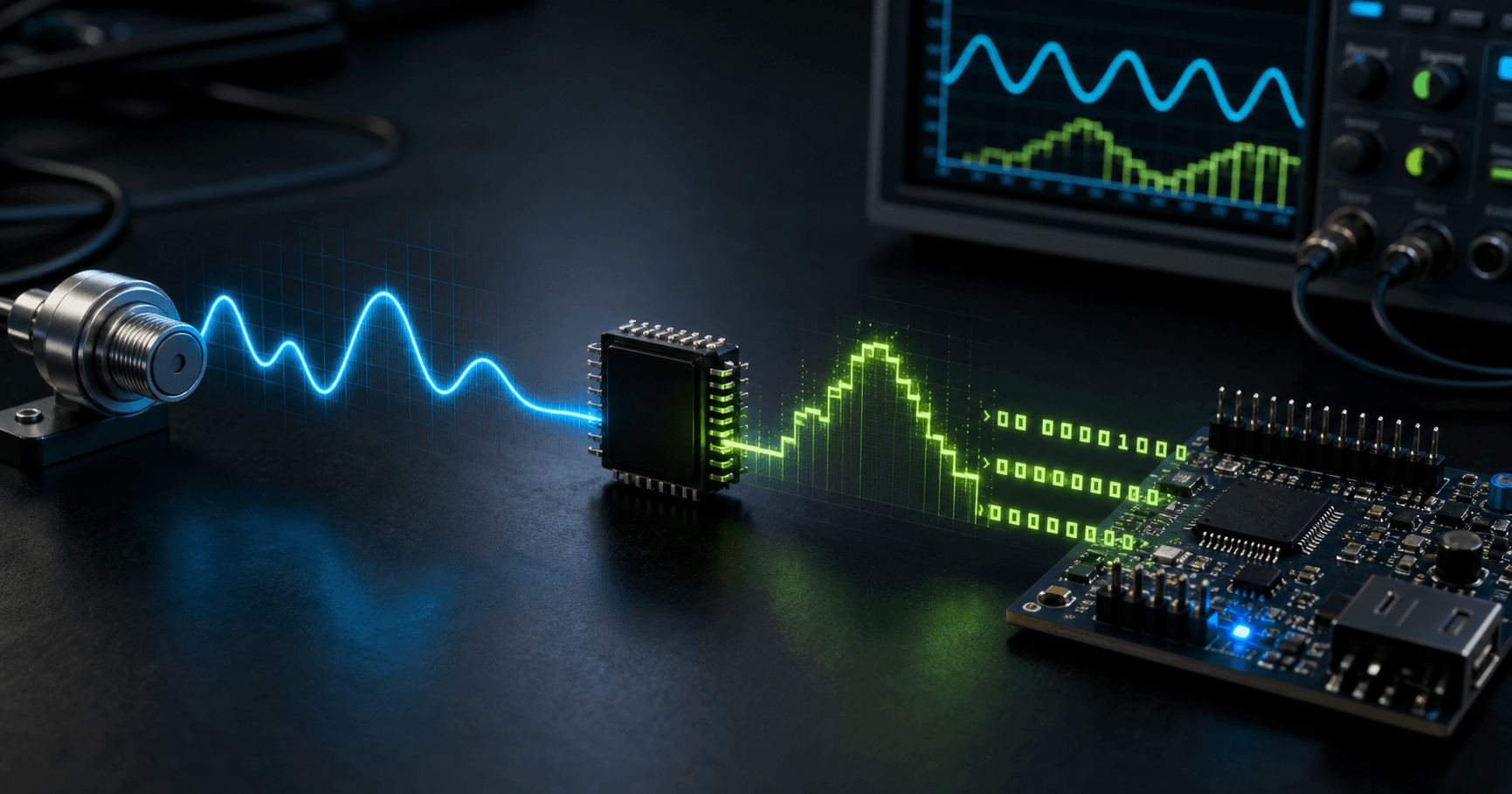
An analog to digital converter samples a changing voltage and assigns each sample to the nearest digital code. The circuit does not understand temperature, pressure, or light directly. It only sees a voltage inside its input range, usually from ground to a reference voltage. That is why sensor interface design is mostly about scaling, filtering, and referencing the signal before it reaches the ADC pin.
Resolution, Reference Voltage, and Step Size
Resolution tells you how many possible codes the ADC can produce. A 10-bit ADC has 1024 codes, while a 12-bit ADC has 4096. If the reference is 5 V, a 10-bit step is about 4.88 mV. If the reference is 3.3 V, the step is about 3.22 mV. Higher resolution helps only when the signal path and reference are quiet enough to support it.
Sampling Rate and Aliasing
Sampling rate decides how often the ADC measures the input. If the input changes faster than the sampling system can observe, the result can become a false low-frequency signal called aliasing. Practical embedded designs add a small RC low-pass filter, choose a sampling rate well above the signal bandwidth, and average multiple samples when the signal is slow.
Practical ADC Design Checklist
Start by defining the maximum sensor voltage, expected bandwidth, required accuracy, and allowed noise. Keep the source impedance low enough for the ADC sample capacitor to charge. Use a stable reference, route analog ground carefully, and avoid sampling during high-current switching events such as motor PWM edges.
Parts and Modules Availability in India
For student labs and prototype builds in India, look for the exact voltage rating, interface level, package type, and module quality before buying. SP Road in Bangalore, Lamington Road in Mumbai, Lajpat Rai Market in Delhi, Ritchie Street in Chennai, Koti in Hyderabad, Budhwar Peth in Pune, and Chandni Chowk Market in Kolkata commonly stock beginner-friendly modules and passives.
Frequently Asked Questions
What does an ADC do?
An ADC converts an analog input voltage into a digital number. That number represents the closest available code for the voltage at the sampling instant, so reference voltage, resolution, source impedance, and noise all affect the final reading.
Why does ADC resolution matter?
It matters because small interface decisions can change accuracy, reliability, safety, and debugging time. Understanding the fundamentals helps you choose values, modules, and wiring methods intentionally.
What is the most common ADC design mistake?
The most common mistake is treating the circuit as ideal. Real components have limits such as input impedance, noise, timing, voltage ratings, heating, drift, or contact behavior.
Can beginners use this in Arduino projects?
Yes. Start with a low-voltage breadboard setup, verify ratings, use conservative resistor values or modules, and test one signal at a time before connecting expensive boards or high-power loads.
Conclusion
How ADC Works becomes much easier when you separate the ideal idea from the physical limits. Use the specs above, test with conservative values, and connect this topic with related Volt X guides before scaling a prototype into a finished build.