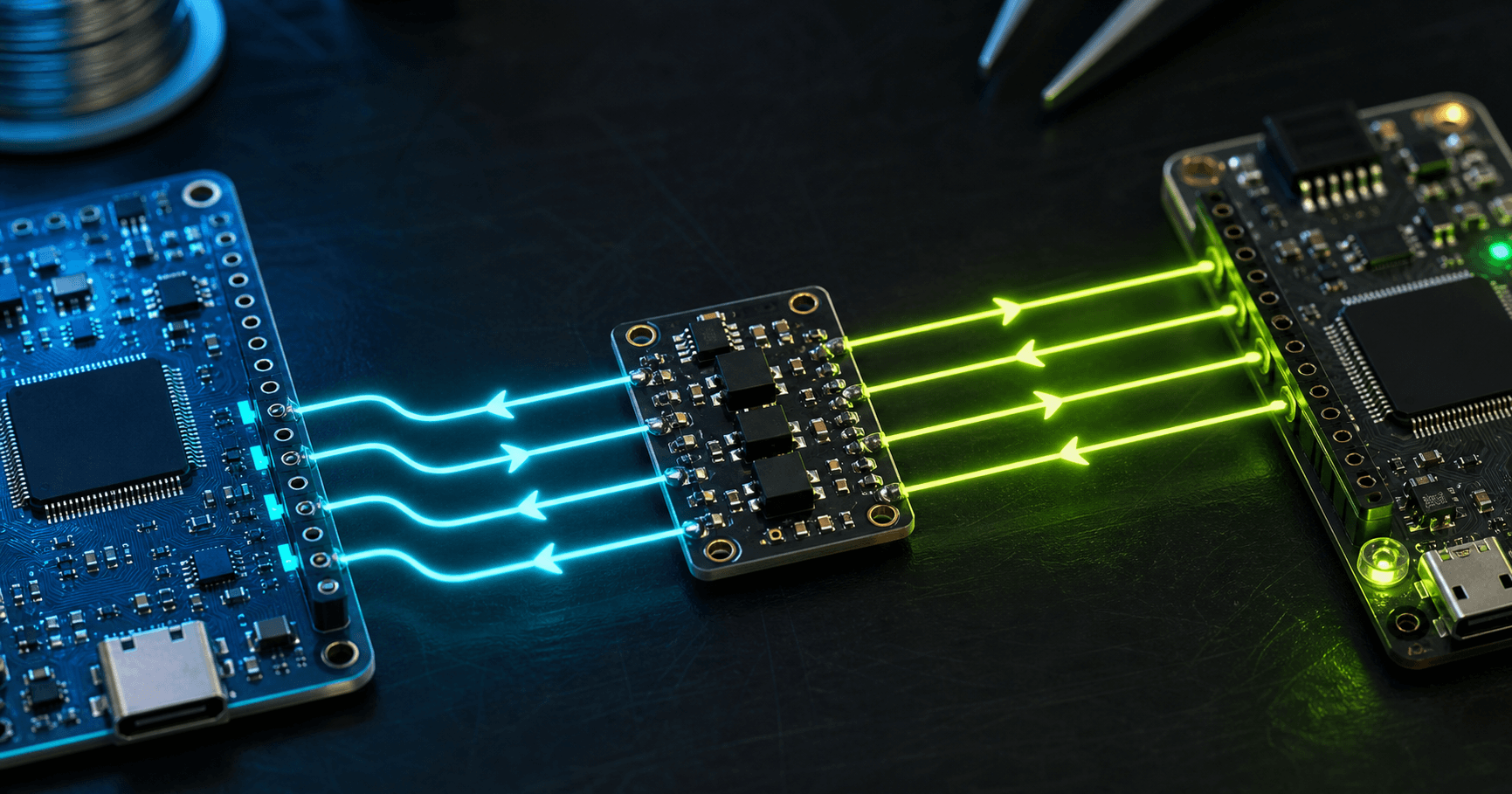
How Logic Level Shifters Work: Direct Definition
- [How Logic Level Shifters Work] [connects] [circuit theory to practical wiring]
- [how logic level shifters work] [improves] [debugging accuracy and component selection]
- [Volt X guides] [link] [related tools, sensors, and embedded systems]
Why Level Shifting Exists
A 5 V output connected directly to a 3.3 V-only input can forward-bias protection diodes and damage the chip. The reverse direction can also fail when a 3.3 V high is not recognized as high by a 5 V device. Level shifting makes mixed-voltage systems communicate without abusing input limits.
One-Way Level Shifting
For slow 5 V to 3.3 V digital signals, a resistor divider is often enough. For faster signals, use a proper buffer or translator IC. For 3.3 V to 5 V, many modern 5 V chips accept 3.3 V as high, but you must check the VIH specification rather than guessing.
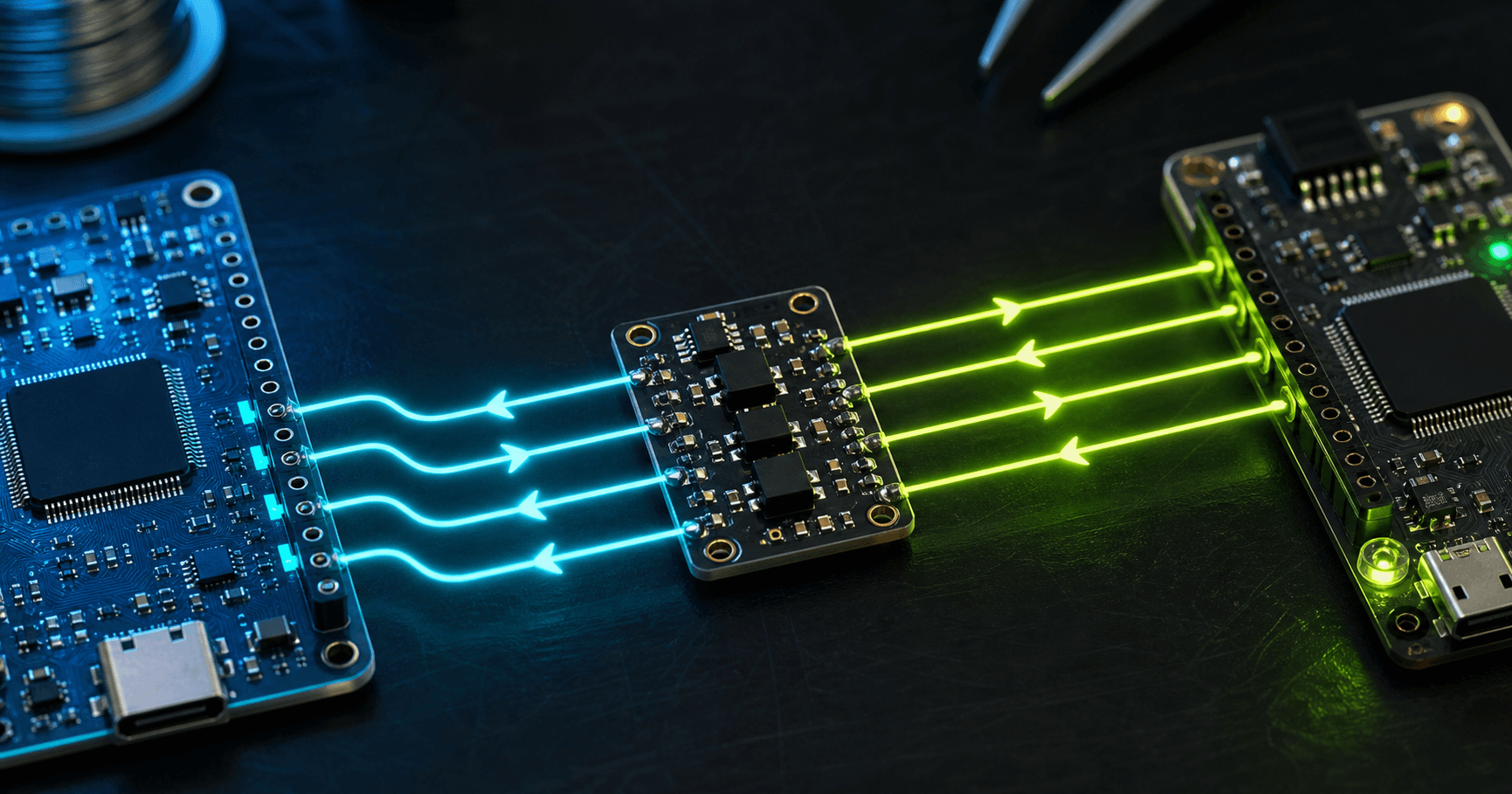
Bidirectional MOSFET Level Shifters
I2C needs open-drain bidirectional signaling. A small N-channel MOSFET with pull-ups on both sides can translate between voltage domains while allowing either device to pull the line low. This is why common 4-channel level shifter modules work well for SDA and SCL.
When Modules Fail
Cheap level shifter boards are not universal magic. They work best for open-drain buses and moderate-speed logic. SPI, UART, and high-speed one-way signals often behave better with dedicated direction-controlled translator chips such as TXS, TXB, or 74LVC families chosen for the signal type.
Parts and Modules Availability in India
For student labs and prototype builds in India, look for the exact voltage rating, interface level, package type, and module quality before buying. SP Road in Bangalore, Lamington Road in Mumbai, Lajpat Rai Market in Delhi, Ritchie Street in Chennai, Koti in Hyderabad, Budhwar Peth in Pune, and Chandni Chowk Market in Kolkata commonly stock beginner-friendly modules and passives.
Frequently Asked Questions
What does a logic level shifter do?
A logic level shifter translates digital signals between voltage domains such as 3.3 V and 5 V. It protects inputs and helps devices communicate when their logic thresholds are not naturally compatible.
Why do logic level shifters matter in electronics?
It matters because small interface decisions can change accuracy, reliability, safety, and debugging time. Understanding the fundamentals helps you choose values, modules, and wiring methods intentionally.
What is the most common level shifting mistake?
The most common mistake is treating the circuit as ideal. Real components have limits such as input impedance, noise, timing, voltage ratings, heating, drift, or contact behavior.
Can beginners use this in Arduino projects?
Yes. Start with a low-voltage breadboard setup, verify ratings, use conservative resistor values or modules, and test one signal at a time before connecting expensive boards or high-power loads.
Conclusion
How Logic Level Shifters Work becomes much easier when you separate the ideal idea from the physical limits. Use the specs above, test with conservative values, and connect this topic with related Volt X guides before scaling a prototype into a finished build.